
Affordable Auto Parts for DIY Repairs: 2026 Guide
Table of Contents
- Where to Find Affordable Auto Parts for DIY Repairs
- How to Find the Right Auto Parts for Your Car
- Cheap Auto Parts Online: OEM, Surplus, and Remanufactured Options
- Used Auto Parts: Safety, Quality, and Warranty Considerations
- Auto Parts Liquidation Pallets: What You Need to Know
- Essential Repair Tools and Accessories for DIY Work
- Total Cost Comparison: DIY vs. Professional Repair
- Common Mistakes to Avoid When Buying Discount Auto Parts
- Frequently Asked Questions
Last Updated: October 16, 2026
Where to Find Affordable Auto Parts for DIY Repairs
DIY car maintenance saves money, but only if you source affordable auto parts from the right places. Overpaying at a big-box retailer versus finding surplus OEM parts at liquidation prices can cost hundreds of dollars per repair.
Online retailers, liquidation platforms, and specialty suppliers offer different price points and inventory types: new surplus parts in original packaging, remanufactured components that perform like new for less, and used parts that require careful vetting.
This guide covers finding affordable auto parts, from verifying fitment to warranty protections on used components, plus cost comparisons, quality checks, and mistakes that waste money on discount parts.
How to Find the Right Auto Parts for Your Car
Choosing the wrong part is worse than paying full price for the right one. A mismatched brake pad set, filter, or suspension component can damage your vehicle or create safety issues. Before you search for affordable auto parts, you need a system for confirming compatibility.

Verify Vehicle Fitment Before Ordering
Your vehicle identification number (VIN) is the foundation of part selection. A 17-character VIN contains the make, model, year, engine type, and transmission information suppliers use to determine compatibility.
Without a VIN decoder, gather these details manually: year, make, model, engine size, and transmission type.
Always verify fitment on the product listing before adding to cart. We Found For You includes detailed fitment information for every part. If a listing doesn't specify compatibility, contact the seller before purchasing.
Check Cross-Reference Numbers for Compatibility
Parts manufacturers use cross-reference numbers to identify equivalent components from different brands. A brake pad set listed as ACDelco 14D1169ACH might also be called FRAM XYZ or Bosch ABC, interchangeable numbers that fit the same application.
Cross-reference lookups are invaluable when you find a discounted part but aren't sure it matches your vehicle. Enter the part number into an online database to see all equivalent numbers from competing manufacturers.
For example, the Champ AF12166 engine air filter we carry cross-references to FRAM CA12166 and Purolator A41392, all three are identical replacements for 3.6L GM crossovers.
Cheap Auto Parts Online: OEM, Surplus, and Remanufactured Options
Online retailers offer three categories of affordable auto parts: OEM surplus, remanufactured parts, and used components, each with different cost structures and quality implications.
OEM Parts at Liquidation Prices
OEM parts are manufactured by the same company that supplied your vehicle at the assembly line, engineered to exact specifications.
Liquidation inventory changes this equation. Retailers acquire overstock, discontinued lines, and warehouse surplus at steep discounts, brand new, sealed in original packaging, identical to dealership stock but priced like aftermarket.
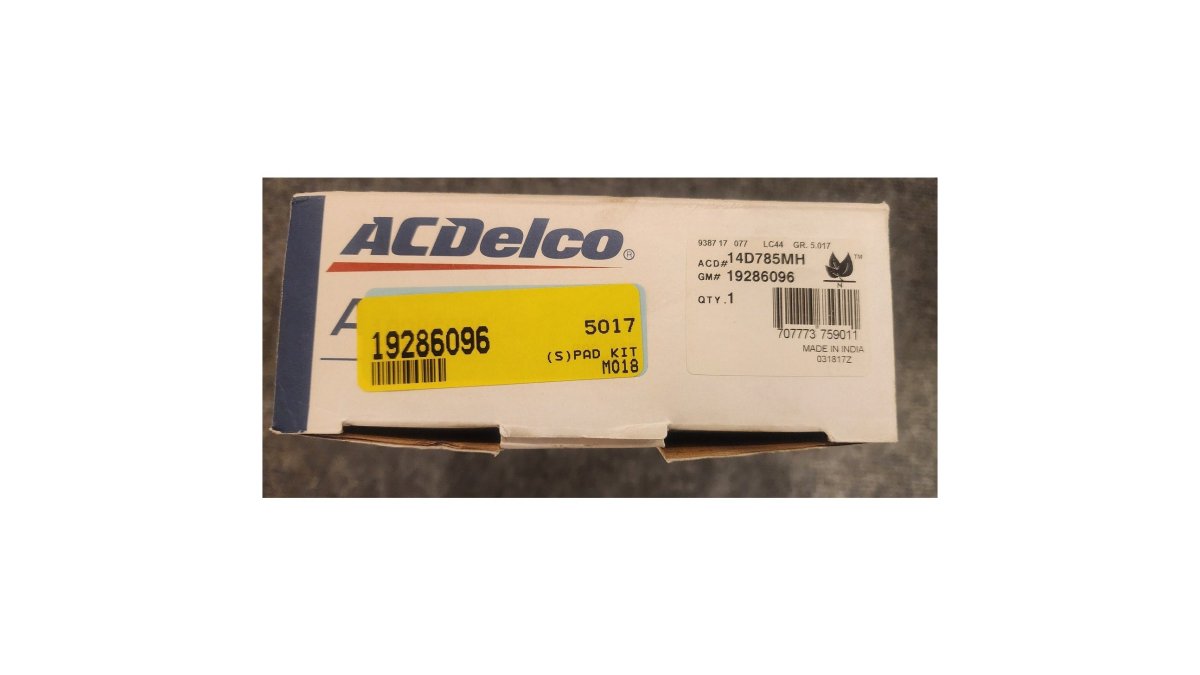
The ACDelco Advantage ceramic front disc brake pads we offer (part 14D1169ACH) cost $34.99. The GM OEM rear brake pad set (19286096) is $29.99.

Liquidation parts carry one risk: they're sold as-is under the First Sale Doctrine. Most reputable sellers include return windows and quality guarantees, but verify the return policy before buying.
Remanufactured Parts: Cost Savings Without Compromise
Remanufactured parts are used components disassembled, cleaned, inspected, and rebuilt to like-new condition. They perform identically to new parts but cost less, often the smart choice for expensive items like alternators, starters, or transmissions.
The process includes replacing worn internal components, testing functionality, and applying a protective coating. Reputable remanufacturers warranty their work, so a failed alternator within the warranty period gets replaced at no cost.
Remanufactured parts make the most sense for high-cost, high-complexity components. For simple, low-cost parts like filters or hoses, new surplus is usually a better deal.
Used Auto Parts: Safety, Quality, and Warranty Considerations
Used parts from salvage yards or online marketplaces deliver significant savings but come with hidden risks. A used brake component, suspension part, or engine seal might have hidden damage or limited remaining lifespan, so buying used requires careful inspection and clear understanding of warranty coverage.
When Used Parts Make Sense
Used parts work best for non-critical applications: interior trim, body panels, mirrors, door handles, and decorative components. These don't affect safety and have long remaining lifespan, a used door panel costs $20 instead of $80 and performs identically.
Avoid used parts for anything involving safety, sealing, or wear. Brake components, suspension parts, seals, gaskets, and bearings degrade with use. A used brake pad set might have only 20% of its lifespan remaining.
If you do buy used, inspect the part in detail before installation. Look for cracks, corrosion, wear marks, or discoloration suggesting overheating or damage.
Core Charges, Returns, and Guarantees
Many parts retailers charge a "core charge", a deposit you pay upfront and recover when you return the old part.
Core charge systems incentivize remanufacturing: retailers recycle old parts instead of sending them to landfills. The problem arises when buyers don't return the core and lose the deposit.
Return policies vary: some retailers offer 30-day returns on all parts, others limit returns to defective items only.
Warranties on used parts are typically limited or nonexistent. Some sellers offer 30-day "as-is" returns if the part is defective, but don't expect a 12-month warranty on a used suspension component.
ACDelco Advantage 14D1169ACH Ceramic Front Disc Brake Pad Set New In Box →
Auto Parts Liquidation Pallets: What You Need to Know
Liquidation pallets contain mixed inventory: overstock, returned merchandise, discontinued product lines, and warehouse surplus. A single pallet might hold 50-200 items across multiple categories, a bulk strategy that works if you know what to expect.
Quality Control and Authenticity
Liquidation inventory is authentic but unvetted. Items are sealed in original packaging, though the packaging might show storage wear, an engine air filter in a dented box contains a brand-new filter, and a brake pad set with a torn outer carton still contains sealed, unused pads.

The risk is receiving items with manufacturing defects or storage damage. Reputable liquidation sellers inspect pallets before shipping and stand behind their inventory with return policies. We Found For You notes condition: "New in Box," "New Other (box shows storage wear)," or "Open Box (unused contents)."
Authenticity is guaranteed when you buy from established liquidation retailers, you won't receive counterfeit parts. However, you might receive surplus from markets outside your region, like a European brake component that doesn't fit your vehicle. Always verify fitment regardless of source.
Common Parts You'll Find in Liquidation Inventory
Liquidation pallets typically include high-volume, fast-moving parts: brake pads, air filters, batteries, hoses, and lighting. You're less likely to find specialized or model-specific parts like transmission components or engine blocks.
Common finds in liquidation auto parts inventory:
- Brake pads and rotors (all vehicle types)
- Engine air filters and cabin air filters
- Oil filters and fuel filters
- Batteries (automotive, marine, powersports)
- Hoses (brake, coolant, fuel)
- Lighting (headlight bulbs, LED replacements, fog light assemblies)
- Suspension components (shock absorbers, struts, springs)
- Belts and serpentine belts
- Wiper blades and refills
- Spark plugs and ignition components
The selection is unpredictable, that's the nature of liquidation. You might find exactly what you need, or parts for vehicles you don't own. If you're buying a full pallet, research typical contents and verify the seller's description matches your needs before committing.
Essential Repair Tools and Accessories for DIY Work
Affordable auto parts alone won't complete a repair. You need basic tools: screwdrivers, wrenches, sockets, jacks, and diagnostic equipment. Many DIY mechanics overlook tool costs when calculating total repair expenses.
Quality tools don't need to be expensive. A precision screwdriver set handles small fasteners on electronics and interior trim. A basic socket set covers most bolt sizes on suspension, brakes, and engine components.
We Found For You carries essential repair tools at budget-friendly prices.
Invest in quality basics: a torque wrench for critical fasteners, a socket set covering common sizes, and safety equipment like jack stands and a fire extinguisher.
| Tool Type | Essential | Budget Price | Best For |
|---|---|---|---|
| Socket set | Yes | $30-50 | Bolts, fasteners, suspension work |
| Wrench set | Yes | $25-40 | Nuts, bolts, brake line fittings |
| Screwdriver set | Yes | $15-25 | Interior trim, electronics, small fasteners |
| Torque wrench | Recommended | $30-60 | Critical fasteners (wheels, head bolts) |
| Floor jack | Essential | $40-80 | Lifting vehicle safely |
| Jack stands | Essential | $30-50 | Supporting vehicle while working |
| Diagnostic scanner | Optional | $50-150 | Reading engine codes, troubleshooting |
Total Cost Comparison: DIY vs. Professional Repair
A professional mechanic charges for labor, plus parts markup. A simple brake pad replacement with affordable auto parts from We Found For You costs $35-50 in parts and an hour of your time.
The labor savings multiply with multiple repairs. An air filter replacement costs $15 for the part alone.
However, DIY isn't free. Factor in tool costs if you don't already own equipment. After that, repairs cost only parts and your time.
Time is also a factor. A professional completes a brake job in 1-2 hours; your first DIY attempt might take 3-4 hours, but by your third job you'll work faster.
Common Mistakes to Avoid When Buying Discount Auto Parts
Saving money on parts doesn't mean compromising on quality or safety.
Buying without verifying fitment. The cheapest part is worthless if it doesn't fit.
Ignoring warranty terms. A $15 used part with no warranty carries more risk than a $25 remanufactured part with a 24-month guarantee.
Not checking cross-references. You might find a discounted part but not recognize it as equivalent to what you need. Cross-reference lookups take 30 seconds and confirm whether a cheaper alternative actually fits.
Ignoring shipping costs. A part priced $5 cheaper but with $12 shipping costs more overall.
Buying more than you need. Liquidation pallets sometimes offer bulk discounts, tempting you to buy parts for vehicles you don't own.
Affordable auto parts for DIY repairs exist at every price point, from liquidation surplus to remanufactured components to used salvage.
Frequently Asked Questions
How do I know what affordable auto parts fit my car?
Start with your vehicle's VIN (Vehicle Identification Number), which you'll find on the driver's side dashboard or door jamb. Use your VIN to verify fitment on retailer websites before purchasing. Check the part's cross-reference numbers against your vehicle's original part number. For example, a Champ air filter ($14.99) lists multiple compatible models and cross-reference numbers like FRAM CA12166 and Purolator A41392. Always confirm compatibility with your specific make, model, and year before ordering.
Are used auto parts safe to install in my vehicle?
Used parts can be safe if sourced from reputable sellers and inspected for wear. Safety-critical components like brakes, suspension, and steering should be new or remanufactured unless you have mechanical expertise to assess condition. Parts like filters, clamps, and accessories are typically lower-risk when used. Check the seller's return policy and warranty. Brake components, for instance, require precise fitment and function, new OEM options like ACDelco ceramic brake pads ($34.99) offer reliability guarantees that used parts may not.
What's the difference between OEM, remanufactured, and used auto parts?
OEM (Original Equipment Manufacturer) parts are new, factory-made components that match your vehicle's original specifications, like the ACDelco brake pad sets available for $29.99-$34.99. Remanufactured parts are used components restored to like-new condition and tested, often at 30-50% less than OEM. Used parts are salvaged from other vehicles and vary in condition; they're the cheapest option but carry higher risk. For DIY repairs, OEM or remanufactured parts offer the best balance of affordability and reliability.
How can I verify the quality of discounted auto parts from liquidation pallets?
Check for original factory packaging, unused condition, and clear cross-reference numbers. Reputable sellers list exact part numbers and compatibility information. Inspect photos for damage or signs of previous use. Look for warranties or return policies, sellers offering 30-day returns demonstrate confidence in product quality. Avoid parts with vague descriptions or missing fitment details.
Is it cheaper to buy auto parts online or at a local store?
Online retailers typically offer lower prices due to reduced overhead, especially for surplus and liquidation inventory. A Champ air filter costs $14.99 online. Local stores provide immediate availability and expert advice but charge markup for convenience. Online shopping works best when you know exactly which part you need and can verify fitment in advance. Factor in shipping costs and delivery time when comparing total expenses. For budget-conscious DIY repairs, online liquidation sources often provide the best value.